
The Art of Flow | Guiding Visitors with Thoughtful Queuing and Wayfinding
![]()
Summary
This article looks at how thoughtful queuing and wayfinding improve visitor flow in museums and galleries, reducing confusion, supporting accessibility, and creating calmer, more intuitive visitor experiences.
In July 2019, the Louvre temporarily relocated the Mona Lisa to enable renovation works in its main gallery, the Salle des États. As one might reasonably imagine, the change created a new pinch point in the world-famous museum. Visitors were funnelled up escalators and through a single doorway, with queues that could stretch beyond an hour, followed by a tightly managed, seconds-long viewing window in the Galerie Médicis.
It was a reminder, played out on perhaps the largest global scale of all, that engaging with the artwork – regardless of its cultural importance – is just one part of the visitor experience.
Indeed, more recently, reporting on the Louvre has again highlighted frustration linked to overcrowding, long waits, and signage that does not always help people regain their bearings in busy environments. While few venues will ever face Mona Lisa-levels of demand on a day-to-day basis – all museums and galleries should consider flow, queuing, and wayfinding as integral parts of the design language.
Guidance, when executed properly, feels almost invisible, reducing hesitation, preventing crowds from congregating in the wrong places, protecting exhibits without making visitors feel managed, and giving staff more control on days when the unexpected might happen.
![]()
Start with the route, not the barrier
Define what visitors need at each moment
The natural flow of visitors improves when you design from the visitor’s perspective rather than from a floorplan. They will arrive naturally equipped with a set of internal questions: where do I go first, where do I queue, how long will it take, and how do I get back out without feeling lost. If those answers feel unclear, visitors instinctively slow down, scan, backtrack, and follow other people rather than the intended route.
A practical starting point is to map the journey in stages; arrival and orientation should differ from gallery navigation, and gallery navigation differs again from the final stretch to a headline object or exhibition exit. At each stage of the journey, decide what a visitor should do next and what action you’re looking to subtly discourage. A queue that starts in the wrong direction, for instance, can block entrances, cafés, shop thresholds, or accessible routes. A well-placed guidance system prevents those issues before staff need to intervene.
It also helps to accept that routes change. Temporary closures, new installations, school groups, and one unexpectedly popular exhibit can all quickly reshape footfall. When you plan flow as a flexible system, you can respond on the day without undermining the atmosphere you worked hard to create
Make wayfinding legible at human speed
Consistency and intuitiveness are key
In the book The Image of the City, American urban planner and theorist Kevin Lynch uses the term “legibility” to describe how easily people can recognise parts of a place and organise them into a coherent pattern. In cultural venues, legibility doesn’t need to strip away character; instead, it should give visitors a reliable thread they can follow, even when they are distracted, tired, managing children, or navigating with mobility aids.
The strongest gallery and museum wayfinding systems are consistent – using the same vocabulary for destinations, the same tone of instruction, and the same visual rules for hierarchy. Visitors shouldn’t have to spend long decoding each sign and information stand as they navigate the museum.
Meanwhile, placement matters as much as content. A sign that is visible only when the corridor is empty will fail precisely when it is needed most – and, in busy conditions, people only read signage in fragments. They catch the arrow first, then the keyword, then, only if they have time, the supporting detail. Designing for such behaviour leads to clearer, more manageable outcomes.
You can also reduce reliance on signage by shaping movement throughout the environment. Sightlines toward a clear destination, a natural landing area where people can pause without blocking other visitors, and a predictable rhythm of cues all reduce the feeling of confusion. Wayfinding improves when visitors feel they are discovering a route rather than being corrected by it.
Treat the queue as part of the exhibition environment
Queuing shouldn't feel stressful, even when demand is high
In the Louvre example, the combination of relocation and constrained access created bottlenecks and a sense of an assembly line experience. An extreme scenario, but the ingredients are familiar: a single doorway, a narrow threshold, and no room for people to regain orientation once they join the line.
A queue feels manageable when visitors understand its purpose and its shape. People manage the wait better when they can see progress, even if it is slow. Confusion can arise when the line doubles back without explanation or appears to stall for no visible reason. Small cues, a clear start point, an obvious end point, and tidy, evenly spaced lanes reduce the feeling of disorder.
Queue design also needs to respect the setting. In museums and heritage venues, the line often sits in sight of exhibits or architectural features. A system that looks industrial can jar with a carefully considered interior. Equally, a system that is too subtle can fail to signal boundaries, which is when visitors step into staff-only areas or drift too close to sensitive displays. The right approach sets boundaries clearly, with a visual language that fits the space.
![]()
Use tools that support the architecture
A retractable system can keep the space adaptable
Many museums and galleries have learned to live with traditional belted crowd control because it works mechanically. The problem is that the visual language often belongs to transport hubs and temporary event sites rather than cultural environments. For venues where finish and atmosphere are integral, the hardware becomes a key component of the visitor experience.
This is where a refined retractable barrier can make all the difference.
Absolute’s Q Line Retractable Barrier is designed as a fully retractable system for queue management, visitor flow, temporary closures, and event control, with a slim profile and brushed stainless steel finish intended to sit subtly in both contemporary and heritage settings. The freestanding unit stands at 915mm high and includes a 3.2m slimline cord that extends and retracts smoothly, so the same space can operate in different modes across the day without heavy reconfiguration.
Operationally, retractable systems help when you need to change the plan quickly. A gallery might run open circulation in the morning, then introduce a managed line for a talk, a school group arrival, or a late afternoon surge. A barrier that deploys cleanly and retracts when not required allows staff to regain the original character of the room without leaving a permanent visual trace.
The Q Line’s fastening method is designed for quick, intuitive connection, and the base includes non-skid and scratch pads to protect floor surfaces, which is particularly important in listed buildings and high footfall interiors. Where projects call for a specific finish, the barrier can be produced in bespoke RAL colours, allowing visitor management tools to align with an interior scheme or brand requirements.
A queue system also benefits hugely from clear messaging. When barriers and signage work as one, the visitor’s experience feels guided rather than constrained. That might mean pairing a retractable barrier layout with directional prompts at the decision points, and an interpretation that explains why a particular route is in place, especially during temporary closures or peak demand.
![]()
Make accessibility part of flow design
Guidance should work for every visitor, every day
Accessibility and visitor flow are closely connected. When wayfinding is unclear, visitors who need more time to interpret information are placed under pressure, and congestion increases for everyone. When routes are predictable, evenly paced, and supported by cues that work across different needs, the whole venue becomes easier to navigate.
A useful mindset is the Social Model of Disability, which frames disability as arising from barriers in the environment rather than from the individual. Applied to wayfinding and queuing, this pushes design decisions in a practical direction. It leads you to consider line widths, turning spaces, rest points, and the clarity of information as part of the visitor offer rather than as compliance tasks.
In practice, that often means ensuring that the accessible route is the obvious route. It means avoiding last-second instructions delivered only by staff in a crowded foyer. It also means checking that temporary queue systems do not block step-free access, seating areas, or quiet routes used by visitors looking for a calmer environment.
Keep improving through observation
Flow is a living system
Even the best planned route will behave differently once real visitors arrive. People move in groups, stop for photographs, gather around labels, and change direction when something catches their attention. That is why the most effective venues treat visitor guidance as an ongoing process of observation and adjustment.
Regular walk-throughs during peak times reveal issues that are invisible during quiet hours. You notice where people hesitate, where they drift into staff routes, and where the queue naturally wants to form. Those are often the places where a small intervention has an outsized effect. A single directional cue, a clearer entry point, or a barrier run that creates a clean lane can remove repeated friction.
Flexible equipment supports such an approach. A retractable barrier system gives you the ability to test layouts, respond to unexpected demand, and then return the space to its original form when the pressure subsides. Over time, those small refinements add up to a venue that feels calmer, safer, and easier to enjoy, even on the busiest days.
If you are planning updates to visitor flow, reviewing existing queuing points, or preparing for a high-demand season, Absolute can advise on museum-grade solutions that guide visitors while adhering to the carefully curated museum or gallery environment.
The Q Line Retractable Barrier is a practical option where you need effective crowd management without visual disruption. To speak to a member of the team about this product, please do get in touch today.
get in touchBrowse Directional Barriers

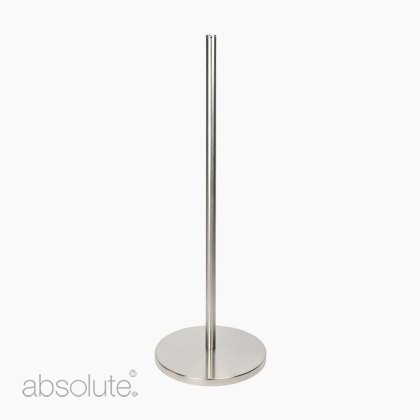
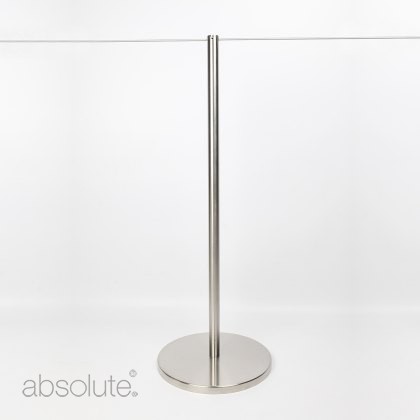 Q Barrier Freestanding$380.73 (ex VAT)
")
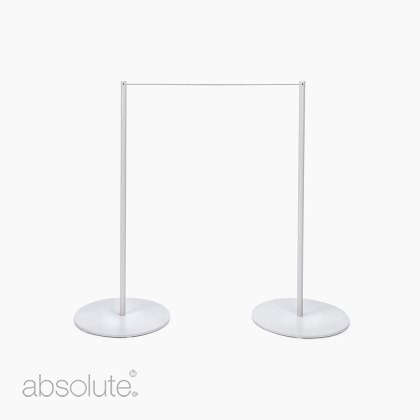 Essentials Freestanding Barrier (900mm)$202.86 (ex VAT)
")
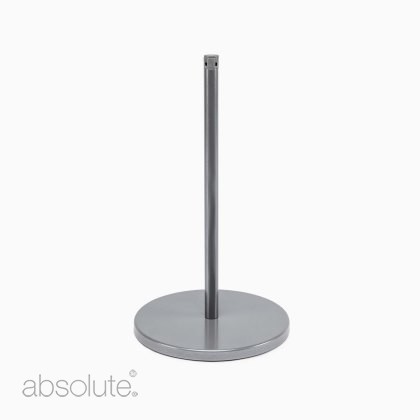 Freestanding Barrier (400mm)from $167.58 (ex VAT)
")
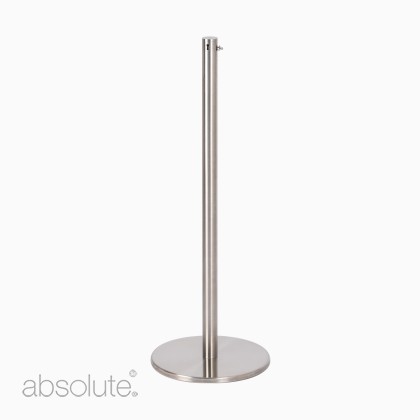
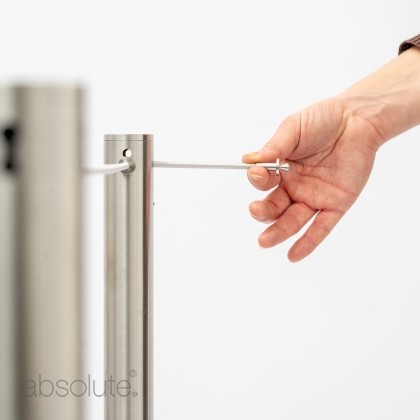 Q Line Retractable Barrier Freestanding (NEW)$536.55 (ex VAT)
Need Advice? We're Here to Help.
Our professional, experienced team are here to help and offer advice relating to your specific artworks or installation setting. Please contact us for further assistance.
Contact Us-
Posted by Jack Turner
19th January 2026