
Displaying Collections in Libraries, Universities, and Public Spaces
Summary
Displaying collections outside of traditional museum settings brings both opportunity and complexity. In spaces like libraries, universities, and civic buildings, curators must balance accessibility with protection, adapting to changing environments, varied visitor behaviour, and multi-use demands. This guide explores how to create museum-grade displays that remain secure, flexible, and visually cohesive beyond the gallery.
![]()
On paper, a library atrium or a university concourse is the perfect place to share an art collection.
With strong footfall, a naturally curious audience, and buildings that typically carry a civic sense of pride and architectural grandeur, the settings look ready-made for public cultural display.In practice, however, mixed-use environments ask a new set of questions of curators and collection managers. One consideration is the increased risk of displaying exhibits alongside everyday activities; a challenge which can be found even in museum or designated gallery spaces.
As discovered in Hirsch and Gallagher’s 2024 study, Defensible Collections: Designing a Safe Exhibit Space, which assessed the Fossil Hall at the Smithsonian, a significant proportion of reported exhibit damage occurred in the area immediately adjacent to a café.
Because the food service space visually blended into the exhibition and boundaries were unclear, visitors frequently carried food into the gallery, lingered in circulation areas, and treated the threshold as a social space rather than one designed for viewing the collection.
But the lesson applies beyond natural history galleries. Where food, queuing, social space, and collections overlap, you need clarity, distance, and a display system that stays functional as the surrounding environment shifts.
Today, we’re looking at what ‘museum-grade’ really means when the setting isn't a museum.
![]()
The study of visitor flow and behaviour
Mixed-use environments often appear stable when interpreted as a floor plan, but behave differently during peak times. The quiet weekday morning can quickly become a crowded lunchtime corridor; a university building can oscillate between open days, conferences, exam season, and graduation.
Planning a display in such settings starts with understanding behaviour.
Where do people naturally cut corners? Where do they slow down to read a sign, wait for a lift, or gather before a lecture? Which route becomes a shortcut when it rains outside? It’s those natural human patterns that decide where you need protection and what kind of information presentation will actually be viewed.
In non-specialist settings, subtle cues do plenty of heavy lifting.
A clearly defined boundary changes visitor behaviour without making the space feel overly supervised. A label that sits at a readable angle stops visitors from leaning in and crowding an object; a gallery hanging system that keeps artworks stable and aligned helps a display feel intentional, even when the space around is lively and engaged.
The most practical approach is to plan for “change moments” – the times when staff reset furniture, switch from daytime public access to evening events, or rearrange a foyer for a ceremony.
Importantly, your infrastructure needs to stay intact, even when the settings around it are constantly changing. This is where flexible barriers, modular signage and adaptable hanging systems can make all the difference between a display that works and one that constantly needs intervention.
![]()
Use boundaries that visitors understand instinctively
In libraries, universities, and civic buildings, visitors may not arrive expecting museum rules. They are used to touching handrails, leaning on ledges, and moving close to walls to let others pass. If a collection is displayed without a clear boundary, contact becomes far more likely, even with well-meaning visitors.
A discreet barrier creates a line that visitors instinctively recognize. A line can be modest, but it needs to be consistent. When a boundary is placed with consideration, it protects the object and the visitor experience. People can stand, look, and read without feeling they are in the way.
For environments that need frequent layout changes, a Freestanding Barrier fits the reality of multi-use spaces. The form is minimal, the footprint is stable, and the barrier line can be reconfigured as the venue changes. In a civic hall that hosts exhibitions one week and community events the next, that kind of flexibility keeps protection in place without creating a permanent obstacle course.
Barriers become even more useful when they also carry information. In a non-museum setting, the time staff spend answering the same questions can be reduced, and visitor confidence increased – particularly useful for touring displays, pop-up exhibitions, or collections presented as part of a wider building narrative.
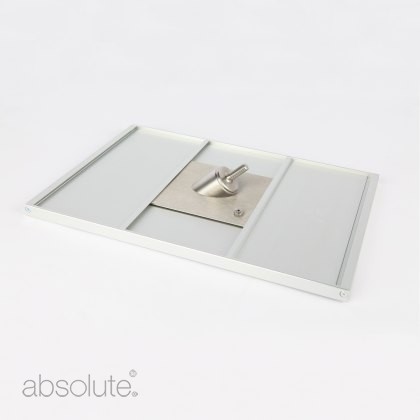
If you want a barrier to double as an information point, pairing a barrier signage adapter like the Q Barrier Signage Adapter with a compact label format can turn a boundary into a helpful guide, while keeping the surrounding space visually quiet.
In the end, the goal is to create a boundary that feels natural within its occupied space. When it looks improvised, visitors will inevitably test it.
![]()
Keep interpretation simple and consistent
In a museum gallery, visitors arrive ready to engage. In a university lobby, as an example, their minds and direction of travel are often elsewhere. The difference changes how you should approach interpretation. Clarity, consistency, and placement are all vital.
A reliable starting point is to keep a single label format across the display, even when the amount of text varies from object to object. In mixed-use environments, visual clutter leads visitors to step closer to make sense of what they are seeing, inevitably increasing contact risk.
For wall-based interpretation, Label Holder systems provide a simple, discreet presentation with clear or low-reflective acrylic options. Low-reflect covers are particularly helpful in public spaces where lighting is often designed for general circulation rather than focused display. Glare is one of the quickest ways to make a label unreadable.
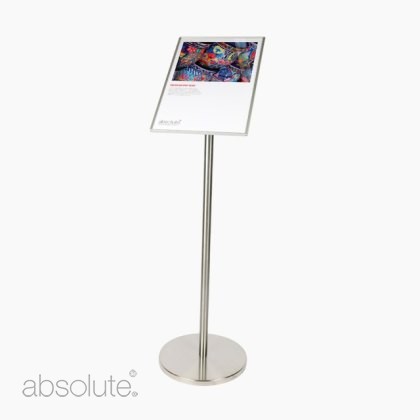
In spaces where wall fixing is not appropriate, Information Stands provide interpretation and direction at an accessible reading angle. They are especially useful in buildings with a changing programme, as the stand can be moved as and when required. In a library, that might mean shifting an interpretation point when a reading group takes over a nearby area. In a civic venue, it might mean moving signage for an evening event while keeping the collection protected.
Freestanding labels also play a role in mixed-use settings, particularly when objects are on plinths or in cases that are set away from walls. Freestanding Label Holders and Display Case Label Holders can keep information close to the object without competing with it.
![]()
Build flexibility into the hanging infrastructure
One of the most common challenges in non-museum venues is the reluctance, or inability, to drill and re-drill walls. In universities and civic buildings, walls are often newly finished, heritage protected, acoustically treated, or part of a wider building standard. Even when drilling is permitted, repeated changes to a display can quickly lead to patchwork repairs and uneven alignment.
Track systems quickly solve that problem by putting the infrastructure in the right place once, then allowing the display to evolve. In mixed-use spaces, the ability to adjust works without leaving a trail of wall repairs is as invaluable as it is operationally realistic.
For existing walls, H Track (Rail) Art Hanging Systems are designed for high-level installation and regular change. In many public buildings, placing the track near the ceiling line keeps it visually discreet while providing a stable hanging point that can be used across a rotating program. That subtlety of design is important in settings where exhibitions need to sit comfortably alongside everyday architecture.
In new builds or significant refurbishments, T Track (Rail) Art Hanging System offers an option designed to be recessed at the wall and ceiling junction. For libraries, universities, and civic projects, that kind of integration can be highly desirable when display capability is part of a broader building vision.
When wall fixing is simply not an option, ceiling-based solutions such as C Track (Rail) Art Hanging System can keep artworks off sensitive wall finishes, timber paneling, or heritage surfaces that need protection. In many public spaces, the constraint is often the safeguarding of the building's fabric; a ceiling track approach can open up a whole world of display possibilities.
Once the track is in place, the rest of the system becomes about stability, alignment, and security. In busier non-museum settings, direct-to-wall hangers still have a role for specific installations, particularly where the artwork needs to sit close to the wall with no visible fixings and where security is a chief concern. Ryman Hanger systems are designed for near-flush mounting, with built-in adjustability and varying security levels, which can be useful in spaces where staff cannot supervise continuously.
![]()
Where to start if your venue is not a museum
If you manage collections in a library, a university, or a civic venue, your display environment often carries competing priorities. You need protection, but you also need the space to feel welcoming and functional. You need interpretation, but it needs to stay visually understated. You need a hanging infrastructure that allows for change, but it needs to integrate cleanly with the building.
Once those fundamentals are in place, you can refine. You can test sightlines, adjust label placement, and improve the cadence of the display. You can respond to visitor behaviour without starting from scratch each time.
If you are planning a display in a mixed-use environment, speak to the Absolute team about the most suitable range of museum-grade hanging systems, protective barriers, and information and signage products for your needs.

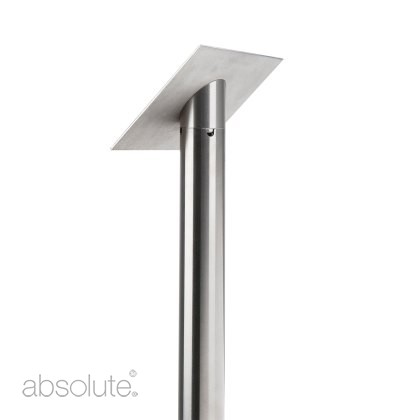 Q Barrier Signage Adaptor€81.28 (ex VAT)
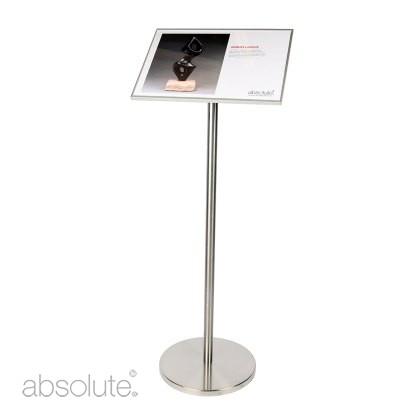 Information Standfrom €378.46 (ex VAT)
 Art Hanging System")
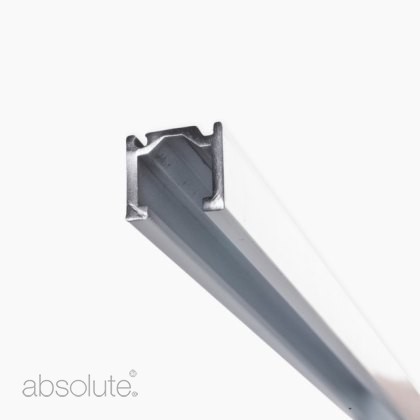
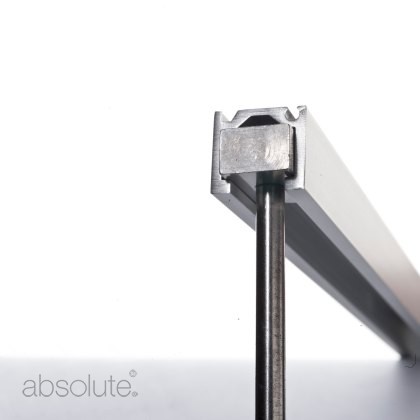 C Track (Rail) Art Hanging Systemfrom €73.66 (ex VAT)
 Art Hanging System")
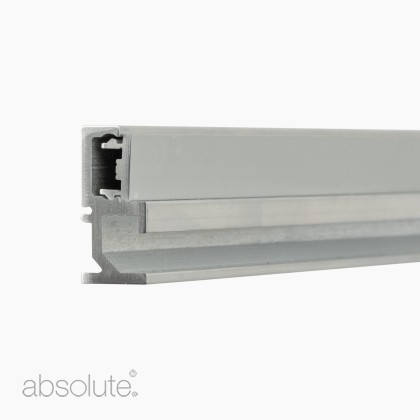
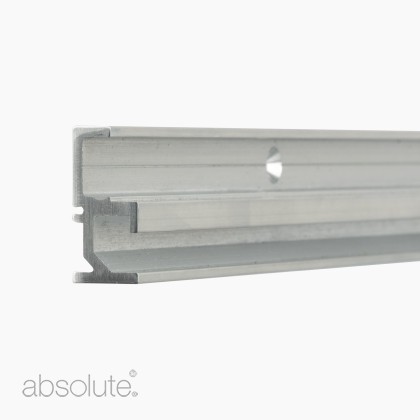 T Track (Rail) Art Hanging Systemfrom €129.54 (ex VAT)
Need Advice? We're Here to Help.
Our professional, experienced team are here to help and offer advice relating to your specific artworks or installation setting. Please contact us for further assistance.
-
Posted by Jack Turner
23rd March 2026
FREE Delivery to the US for all orders over $1500
View Our Museum & Gallery Products Digital Brochure