Engaging All Five Senses in Exhibits
![]()
Summary
Multi-sensory museum design goes beyond visual displays to create richer, more immersive visitor experiences. By thoughtfully integrating sound, touch, scent and spatial flow, exhibitions can deepen engagement, improve accessibility, and encourage longer, more meaningful interactions. This approach isn’t just about adding sensory elements, it’s about ensuring the environment supports each one, allowing visitors to connect with collections in a more intuitive and memorable way.
“A painting is not a picture of an experience; it is an experience.” – Mark Rothko
The concept of the multisensory museum is by no means a new idea. Art galleries and museums have long used touch, sound, smell, and live interpretation to help visitors understand their collections.
Indeed, in The Museum of the Senses, cultural historian Constance Classen describes how museums were not always conceived as spaces of detached, purely visual engagement.Precursors to the modern museum, cabinets of curiosities or “wonder-rooms" of the 16th and 17th century showcased natural history and fine art of the age, actively encouraging visitors to handle, smell and even taste collection pieces. The emphasis on restraint and visual order, then, is less a timeless norm than a later development in how culture frames knowledge and antiquity.
Fast-forward to the present day, and institutions across the world are upholding the ideas of creating space for broader sensory encounters. The Rijksmuseum in Amsterdam has developed tours that combine scent and tactile discovery. Meanwhile, the Uffizi Galleries have introduced a multisensory route through the Gallery of Modern Art at Pitti Palace in Florence, combining touch with music, literature and scent.
What these examples make clear is that multisensory interpretation requires each element to have the right conditions in place around it. For visitor experience leads, curators and interpretation teams, that means thinking carefully about how the space will support each sensory layer in practice.
![]()
A multi-sensory exhibition begins with the approach
Before a visitor has engaged with a single object, they are already responding to certain sensory cues. From the width of an entrance to the distance between displays, to the rhythm of an intended route and the level of ambient sound. Such subtle touchpoints all influence a visitor’s receptiveness.
If an arrival sequence feels restrictive or vague, people become preoccupied with navigation. In contrast, if a visitor journey is well-established and clear, visitors are more likely to engage in subtle interpretation and spend longer connecting with the exhibits.
For exhibitions designed to activate multiple senses, the approach to space management and visitor flow is a fundamental concern. Physical, touch-based interactions, for example, require enough surrounding clearance so people can approach with confidence, without feeling overly observed or rushed. In short, a good layout gives each element the conditions they need to work properly.
![]()
Each sense needs room to work
Sight still does a great deal of heavy lifting in museums and galleries, but should not be left to carry the entire experience. Sound does a great job of establishing mood and reinforcing a narrative, bringing static displays to life. Touch can help visitors understand material, form, scale and process in a way that’s direct and memorable, while scent has the unique power to evoke time, place and social history.
The key to balancing the sensory experience is coordination, and its success lies in deciding which senses are most relevant to the story being told. This is where spatial planning becomes interpretive planning. Sensory work is often discussed in terms of content, but it is equally a matter of timing and placement. Visitors need clarity about what they can engage with, and enough breathing room to do so without physical or cognitive interference.
![]()
Visitor flow is part of the experience
When exhibitions are described as immersive, the focus often falls on scenography, sound design or digital media. While those elements are key to the experience, circulation has just as much influence on how it is remembered. A beautifully designed sensory moment can lose its effect completely if it sits beside a bottleneck, a noisy threshold or an overspilling queue.
Flow shapes attention. If visitors are unsure where to stand, they divide their focus between the exhibit and the crowded floor space around them. If they feel they are blocking the route, they shorten their dwell time. If a queue spills into the middle of a gallery, it can interrupt sightlines, swallow interpretation panels and turn carefully built anticipation into frustration. By contrast, when a route is intuitive, and the next step feels obvious, visitors are free to concentrate on the exhibit itself.
Multi-sensory displays often generate longer dwell times because people are listening, feeling, comparing, discussing, and absorbing multiple layers of information. While that’s exactly the positive outcome museums and galleries would hope for, it needs to be planned for. Wider landing spaces, clear queue starts, generous circulation around tactile stations and visible exit routes all help protect the atmosphere of the display while keeping people moving at a comfortable pace.
Guidance supporting the architecture
In museums and galleries, intrusive crowd control hardware can undermine the very atmosphere a team has worked hard to create. The most effective circulation tools tend to be those that sit imperceptibly within the architecture, providing enough structure to guide behaviour without visually dominating the space.
For temporary routes, managed queues or short-term closures, a refined retractable barrier system can be particularly useful. Absolute’s Q Line Retractable Barrier is a good example of how this can be achieved. Its slim profile, understated stainless-steel finish, and retractable format allow teams to shape movement flexibly while keeping the gallery's visual language intact. It creates clear boundaries when needed, then retracts cleanly when the space returns to open circulation.
If an exhibition invites visitors to attend to sound, material, and atmosphere, the tools used to manage movement should feel consistent with that ambition. The same principle applies to signage. Information Stands, Signage Plates and discreet label solutions help reinforce the route, explain temporary changes and answer practical questions before staff intervention is needed. Done effectively, they reduce hesitation and make the entire experience feel calmer.
![]()
Accessibility strengthens sensory design
One of the most valuable ideas to emerge from recent multisensory museum research is that no single sense should be necessary or sufficient for a rich and meaningful experience. The Sensational Museum project has advocated for more inclusive and equitable approaches to museum experience through sensory design. Crucially, it’s an approach that improves exhibitions for everyone.
Clearer routes help visitors who need more time to orient themselves. Well-placed interpretation supports people who prefer to pause and process information at their own pace. Tactile elements and audio layers widen access, but they also deepen engagement for sighted visitors, family groups and people who simply connect better through different modes of interpretation. Accessible design is often a mark of better design overall because it removes friction from the experience.
In practical terms, that means asking a few direct questions early in the planning process. Is the accessible route also the obvious route? Is there enough room around key moments for wheelchair users, buggies and slower-moving groups? Can a visitor understand what to do next without relying on overheard instructions from staff? Can they choose quieter moments within the route if the exhibition contains strong sensory content? It’s those kinds of considerations that shape how inclusive a multi-sensory exhibition really feels in use.
![]()
The importance of flexibility in museum and gallery spaces
For museums and galleries working hard to create layered, sensory-rich exhibitions, adaptability is key to preserving the quality of the experience. It succeeds when the environment gives every layer room to breathe. Sound, touch, scent, and sight all depend on thoughtful pacing and clear movement through space. When circulation is planned with care, visitors feel guided rather than managed, and the exhibition has a much better chance of being remembered for the right reasons.
Use our circulation checklist to sense check your next exhibition layout, and explore Absolute’s directional barriers range to see how subtle guidance can support a stronger visitor experience.
Talk with Absolute Products about your gallery and exhibition needs.

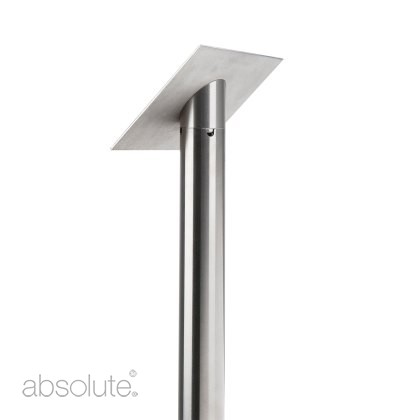 Q Barrier Signage Adaptor$94.08 (ex VAT)
-
Posted by Jade Turner
10th April 2026
FREE Delivery to the US for all orders over $1500
View Our Museum & Gallery Products Digital Brochure