From Storage to Spotlight | Preparing Collections for Exhibition
![]()
Summary
Moving museum and gallery collections safely from storage to display
Preparing artworks for exhibition requires a carefully planned process, with condition checks, accurate documentation and safe handling all helping to protect objects as they move between storage and public display.
Choosing the right hanging hardware can further reduce risk. Ryman Hangers and Storage Hooks allow the same fixing to remain with an artwork throughout its journey, while Link Hangers provide secure support for older, deeper or heavier frames.
For frequently changing exhibitions, flexible H Track, T Track and C Track systems make artworks and interpretation easier to reposition without repeatedly drilling walls or refitting hardware. Combined with a consistent checklist, these systems help collections teams create a safer, more efficient and repeatable changeover process.
When the UK government announced the sale of Blythe House in 2015, it was reasonable to assume that the Victoria & Albert Museum's bulk collection – stored in the West London facility since the 1980s – would simply be shifted to another closed warehouse.
Perhaps defying expectation, the V&A chose instead to construct a venue where the public could explore an otherwise hidden collection: the V&A East Storehouse, which opened in the summer of 2025.
The transition was an immense logistical feat; a concentrated 12-month relocation window in which 250,000 objects, 350,000 books and close to 1,000 archives – ranging from towering architectural fragments to a 3,500-strong footwear archive featuring everything from ancient Egyptian shoes to vintage Christian Dior heels – had to be systematically assessed, packed, and transported across London.
Integrating the 1,600 paintings into the new space presented its own unique logistical hurdles.
Registrars, technicians and conservators had to safely transport everything from delicate oil portraits to large masterpieces, including 127 19th-century canvases documenting India’s ancient Ajanta cave art and the front cloth for the Ballets Russes production Le Train Bleu – ten metres high and eleven metres wide, enlarged from a Picasso gouache by the scene painter Prince Alexander Schervashidze and later signed by Picasso himself.
While few collections teams will ever face a move of such scale, the core challenges involved are ones all will recognise. The careful sequence of decanting, racking, checking conditions, documenting, and planning reinstatements; the universal logistics that museums must navigate each time a gallery space changes, an exhibition rotates, or an artwork goes out on loan.
![]()
The importance of a condition check
The Canadian Conservation Institute's guidance on handling paintings suggests that most damage to paintings and their frames happens during handling rather than while an object sits on display. Museums Galleries Scotland similarly concludes that harm to objects, and occasionally to the people handling them, most often happens when items are lifted and moved incorrectly.
Condition checks, conducted before a piece leaves storage and again once installed, give collections teams two fixed points for comparison. Photographs taken at both stages remove any ambiguity about the exact timing and location of any potential damage. The same visit is typically when the object record should be updated to note the new location, the date of the movement, and the person who authorised it.
For both large collections teams and small museums working with volunteers who may not handle an object again for months, these records serve as a fundamental form of institutional memory, safeguarding valuable artwork between storage and display.
![]()
Choosing a hanging method that limits how often a piece is touched
As every additional point of contact with an artwork carries some risk, the strongest changeover strategies are the ones that reduce handling. It’s here where the choice of hanging hardware becomes a collections-care decision as much as a display decision.
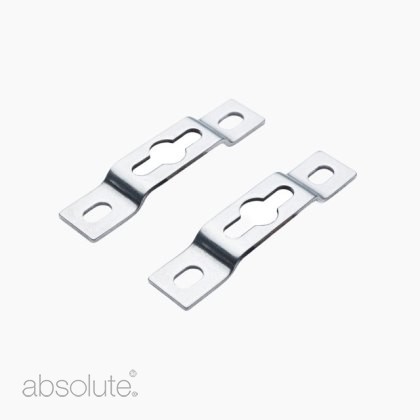
Ryman Hangers, used with Absolute's Storage Hooks, allow the same hanger to stay attached to the frame whether the piece is in the store or on the wall. Rather than removing one hanging device to fit another each time a work changes location, the fixing travels with the artwork, and the slotted mounting holes allow the final position to be levelled without unscrewing and refitting.
For older, heavier, or rebated frames, often the case with Victorian paintings or other period works held in reserve collections, a Link Hanger is generally the favoured option. Its design bridges the gap that frequently exists between a deep frame and the wall, and it is built to support artworks up to 150kg, matching the higher end of what the Ryman range can carry in its extended set.
Selecting the right hanger at the point a piece enters storage, as opposed to improvising a fixing on installation day, means the changeover team already knows exactly how a work will go up before it reaches the gallery wall.
![]()
Track systems and the logic of a flexible changeover
Collections that rotate frequently benefit from a more flexible storage and exhibition strategy. Fixed hanging points make sense for a permanent display, but they can become a liability for a gallery that rotates displays frequently throughout the year; with each new arrangement risking new holes, new adjustments and more handling of the wall as well as the artwork.
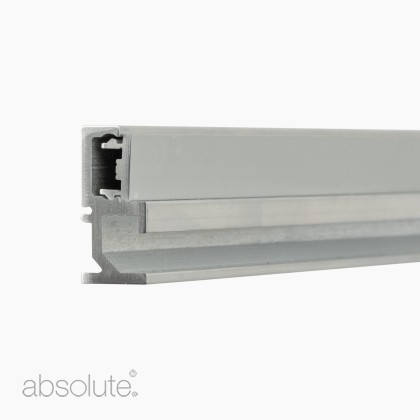
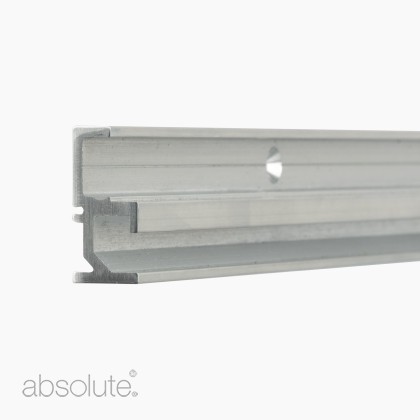
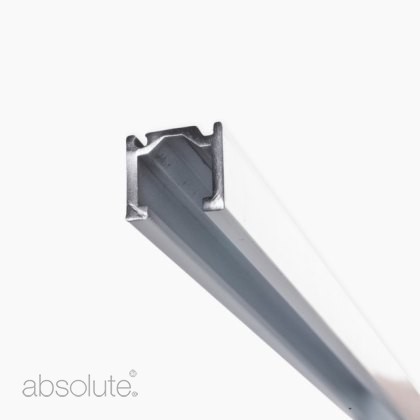
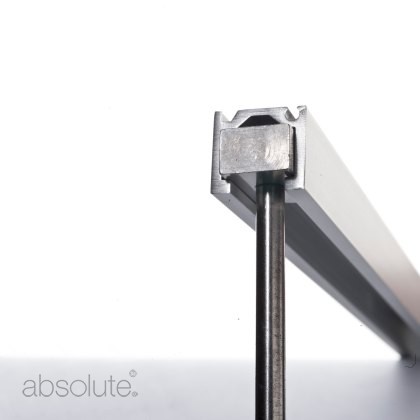
An H Track art hanging system from Absolute is the retrofit answer in such scenarios – able to be fixed to an existing wall, typically high up where it reads as part of the ceiling junction or mouldings, and supports artworks up to 150kg on two suspended supports at standard 300mm fixing centres.
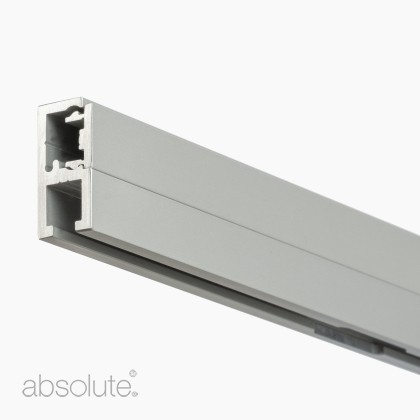
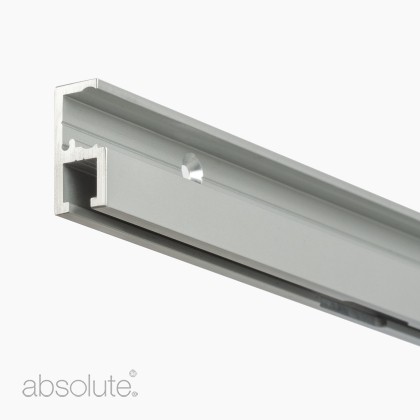
Absolute’s T Track offers the same flexibility but with a cleaner finish, sitting recessed at the junction of wall and ceiling; an option which, crucially, must be designed during construction or fitted into a prepared reveal. A C Track rail, meanwhile, hangs from the ceiling and is the option when the wall cannot be drilled at all, which covers listed interiors and panelled surfaces that must remain untouched.
Once a track is in place, the labour of a changeover shifts from installation to repositioning, a far smaller job for a skeleton crew on a tight turnaround. It also means the condition check and hanging decisions made when a piece first entered the collection stay valid for future rotations, rather than being revisited every time the display changes.
Interpretation should follow the same logic. If label holders and reader rails are fixed to the wall alongside the artwork, every rotation creates a second set of holes and a second round of making good. Mounting them so they can be repositioned means the label moves with the object rather than dictating where it can hang.
FREE Delivery to the US for all orders over $1500
View Our Museum & Gallery Products Digital Brochure