Safeguarding Art in the Era of Activism | Protecting Exhibits from Protest
![]()
Summary
A practical approach to exhibit protection in public-facing spaces
Safeguarding artworks and exhibits in the current climate calls for a layered approach, with deliberate protest, vandalism and opportunistic damage considered alongside more common risks – such as accidental touch, poor visitor flow, crowd pressure and unclear boundaries.
Indeed, protective barriers are most effective when they are treated as part of the wider visitor environment; their role, to define distance, shape behaviour, protect sightlines, while giving staff a clearer point of intervention.
Freestanding barriers, surface-mounted barriers, floor socket barriers, retractable systems, wall terminators, signage adaptors and label holders can all support a more controlled space – but, crucially, the right investment depends on the exhibit, floor type, installation permanence, visitor numbers and security profile.
![]()
In October 2022, two Just Stop Oil activists entered the National Gallery in London and hurled tomato soup over Vincent van Gogh’s Sunflowers. The painting itself, protected by glass, was left intact, though the frame sustained damage.
Two years later, shortly after sentencing in that original case was complete, further activists again targeted Van Gogh works at the Gallery – with the paintings, again protected by glass, reported unharmed.
For those intent on creating a public spectacle, a famous painting such as Sunflowers guarantees a shortcut to global media attention. For collections, security and facilities teams, that creates a difficult challenge: how to preserve open public access while reducing the risk of sudden, deliberate, highly visible action.
For museums, galleries and cultural venues, such incidents serve as a prompt to review their exhibition protection plans in their entirety.
Protective barriers, glazing, visitor policies, bag checks, signage, staff presence, CCTV, object placement and emergency procedures are all part of a unified security strategy. And, while no single product can prevent every deliberate act, a well-planned system can reduce the everyday risks that can leave high-value collections exposed.
![]()
Why protest risk now belongs in exhibition planning
High-profile collections can become stages for public attention
Recent attacks on artworks have shown how quickly a gallery space can become the setting for a global media story. The National Gallery announced tighter security measures in October 2024, including restrictions on liquids, after multiple direct attacks on works in its collection since July 2022.
The Gallery stated that the incidents had caused physical damage, distress to visitors and staff, and disruption to its mission of making art available to the public.
Such changes underline a wider tension for museums and galleries. While accessibility is a vital gateway connecting the public to the arts, unrestricted exposure also carries risks.
Collections managers and exhibition leads now have to consider how a visitor might behave if their intention is to cross a boundary, cause disruption, attach themselves to a wall, damage a frame, throw liquid, produce paint, use a tool, block a route, or create a viral touchstone for social media.
Risk planning should begin with the specific object and its setting. A world-famous painting in a busy urban gallery has a different risk profile to that of a regional exhibition, a civic display, a temporary loan object, a sculpture in an atrium or an artefact in a mixed-use commercial setting. Each requires a different balance between openness, staffing, distance, display technique and intervention time.
Un langage visuel clair et intuitif
Comment les étiquettes des musées favorisent l’engagement
L’American Alliance of Museums a récemment publié les premiers résultats de l’étude « Made By Us » sur l’engagement de la génération Z. Parmi les éléments concrets mis en avant figuraient des titres sans jargon, une collaboration étroite avec les jeunes, des réseaux sociaux actifs, des points d’accès gratuits ou à faible coût, ainsi que des informations claires fournies par le personnel en ligne.
En résumé : les publics plus jeunes réagissent favorablement à la clarté, à la transparence et à la franchise.
Au sein d’une exposition, ces mêmes principes s’appliquent aux supports d’information. Les recommandations du V&A concernant les textes d’exposition préconisent une rédaction intéressante, captivante et accessible à un large public. C’est exactement le type d’équilibre vers lequel les musées devraient tendre pour les visiteurs de la génération Y et de la génération Z, pour qui de longs blocs de texte denses peuvent rapidement faire perdre leur attention.
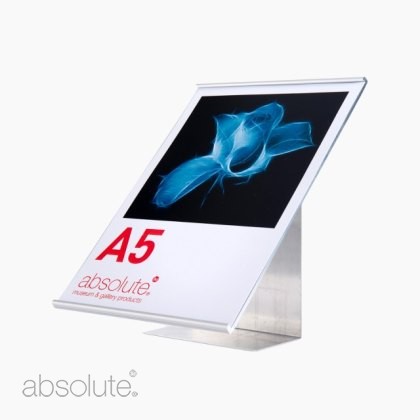
Un langage visuel épuré commence par la sobriété. Les étiquettes doivent être faciles d’approche, avec une structure de titre claire, une longueur de ligne raisonnable et suffisamment d’espace autour du texte. Le porte-étiquette standard et le porte-étiquette autoportant d’Absolute sont parfaits pour ce type de présentation ; leur format fin, avec un dos en aluminium, maintient l’interprétation à proximité de l’objet sans créer d’encombrement visuel, ce qui aide l’exposition à conserver une finition contemporaine et soignée.
Pour maintenir l'intérêt du public, l'objectif est souvent de créer une expérience en plusieurs étapes. Un visiteur peut d'abord lire le nom de l'objet, puis une brève description, avant de revenir au texte plus long dès qu'un élément a retenu son attention. Un étiquetage efficace favorisera ces rythmes naturels d'interaction.
![]()
Think in lines of defence
Protection works best as a sequence of small decisions
The ICCROM guide to risk management for cultural heritage sets out the need to consider risks in context, establish priorities and make decisions that optimise both preservation and public benefit.
In practice, that means shifting focus from individual products and assessing, instead, how people, objects, rooms and procedures interact.
The first line of defence may, in fact, sit outside the gallery itself, through admissions policies, search procedures, prohibited items and visitor communication.
The National Gallery’s current visitor policy, for example, prohibits sharp objects, aerosols, paint, campaign materials, and unsafe acts. They also require that bags be checked upon arrival and that CCTV be in operation throughout the Gallery.
Meanwhile, within the gallery, object placement, protective glazing, exhibition cases, museum barriers, lighting, invigilation points and CCTV sightlines all influence how quickly a staff member can identify and respond to potentially damaging behaviour.
The third line of defence is procedural: how the team responds, how rooms are cleared, how evidence is recorded, how the object is assessed and how the visitor route is restored.
How can protective barriers help reduce incidents of vandalism or protest?
Clear boundaries remove ambiguity and support staff response
Barriers are most effective when they communicate a clear message: the space beyond this line is restricted.
For ordinary visitors, that message is often enough to prevent accidental touch, leaning, crowding or camera-led encroachment. For staff, the barrier creates a clear threshold. Once a visitor crosses it, the action is visible, unambiguous and easier to challenge.
In the face of a deliberate protest, barriers can also add time. A second or two may be enough for a nearby attendant to move, speak, activate a procedure or alert colleagues. The aim, chiefly, is to make the protected zone visible, supervised and operationally useful.
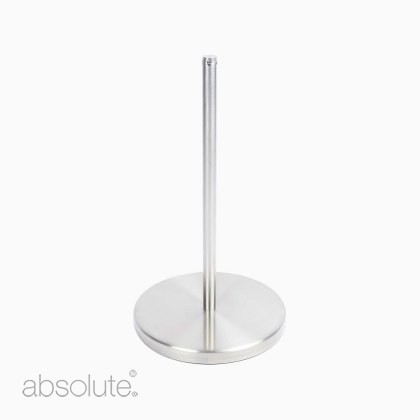
Absolute’s Steadfast® Freestanding Barrier is designed to protect artworks discreetly, using a stable steel base and upright with an elasticated cord to define restricted access. The cord creates a straight line within the space, while the neutral finish and clean form help the barrier sit comfortably within museum and gallery environments.
Planning distance around vulnerable works
The protected zone should reflect the artwork and visitor behaviour
Distance is one of the simplest and most effective protective tools available to exhibition teams – and the correct barrier distance should be judged against the object’s material vulnerability, its size, the visitor approach angle and the likely density of the room.
A small increase in distance can reduce reach, improve sightlines and give staff more time to respond. The space between barrier and object should also be wide enough to make boundary crossing obvious. A barrier placed too close to an artwork can still allow leaning, reaching or splashing to affect the object or frame.
High-profile objects may need a wider protected zone, especially when visitors are likely to photograph, gather, queue or dwell. In such cases, barrier placement should be considered alongside staff positions, camera coverage and the visitor route through the room. A popular work placed near a doorway, narrow route or exit point can create unnecessary pressure, as crowd movement may push visitors closer to the object than intended.
The National Gallery’s visitor policy explicitly instructs visitors not to cross barriers with any part of their body or possessions, touch paintings or frames, or access cordoned-off areas. For museum barriers, their effectiveness is most apparent when their purpose is reinforced by policy, signage and staff presence.
Using signage without creating visual noise
Communication should be clear, calm and close to the point of decision
Many visitors respond well to physical cues alone, but signage gives staff another all-important layer of support.
A simple, well-placed message can clarify why a boundary exists, ask visitors not to cross the line, direct them to a viewing point or explain a temporary route change.
Absolute’s barrier systems can be paired with modular accessories such as wall terminators and barrier signage adaptors, allowing barriers to tie back cleanly to a wall or carry information within the visitor route. Label holders and signage plates can also adapt to fit barrier systems, helping venues present information clearly and discreetly.
The tone of wording should be direct and practical. Visitors are more likely to comply when the instructions are clear, leaving no room for misinterpretation. Short phrases such as “Please do not cross the barrier”, “Protected display area” or “Please keep behind the cord” will always deliver more effect than a long explanation.
Balancing protection with the visitor experience
The safest solution should still respect the exhibition
Museums and galleries are under pressure to protect collections without making visitors feel unwelcome. Heavy-handed controls can alter the atmosphere of a room and create distance between the public and the works. At the same time, repeated attacks can force institutions into stricter measures that affect everyone.
The National Gallery’s 2024 security changes show how quickly the balance can shift. Restrictions on liquids, warnings about large bags, metal detectors and longer entry times were introduced after repeated incidents. The Gallery acknowledged that the welcome visitors received would be affected, while presenting the measures as necessary to protect visitors, staff and the national collection.
Good barrier design helps preserve a more unobtrusive gallery environment. Clean lines, neutral finishes, carefully selected heights, and discreet fixings allow the protective system to sit within the room's architectural language.
A low freestanding barrier may be ideal for a restrained display – a floor socket barrier system, meanwhile, may suit a permanent gallery where visual interruption needs to be minimal.
The key is to decide what the barrier is being asked to do. A boundary for casual visitor behaviour, a queuing system, a temporary closure, a permanent protected zone and a heightened-risk exhibit all have different requirements.
How Absolute can help
Museum-grade barriers for discreet, practical exhibit protection
Protecting artworks from protest or vandalism requires an element of realism.
A determined person may still cross a cord, step over a low barrier or attempt to create a public spectacle. Good protection reduces those opportunities, clarifies boundaries, improves staff response and helps the wider visitor environment work as intended.
Absolute’s range of protective museum and gallery barriers has been developed for environments where display quality, safety, discretion and operational flexibility all need careful consideration.
Review your exhibition protection plan with our barrier selection guide, or explore our protective barriers and accessories to compare the most suitable solution for your collection, venue and visitor environment.
Talk with Absolute Products about your gallery and exhibition needs.
")
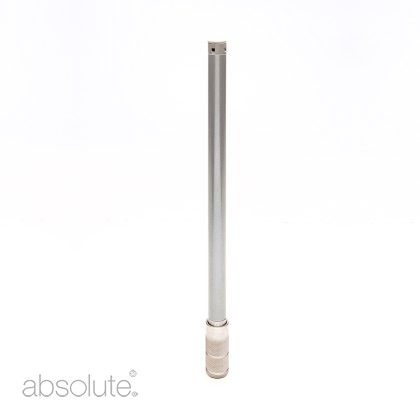 Steadfast® Floor Socket Barrier (Stone)from $151.41 (ex VAT)
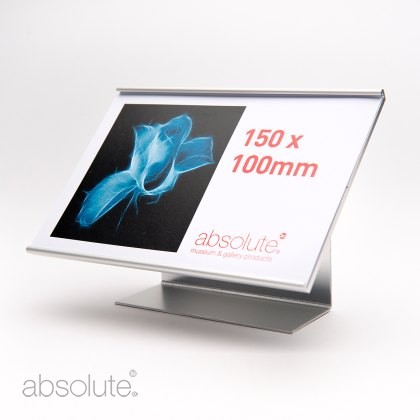 Freestanding Label Holderfrom $45.57 (ex VAT)
")
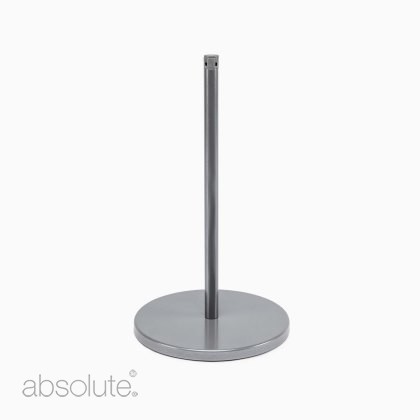 Steadfast® Freestanding Barrier (400mm)from $188.16 (ex VAT)
-
Posted by Jack Turner
8th July 2026
FREE Delivery to the US for all orders over $1500
View Our Museum & Gallery Products Digital Brochure